Play Therapy in Langley

For children, play is more than fun. It’s how they communicate, learn, and make sense of their world.

Play therapy offers children a natural, developmentally appropriate way to express feelings, work through difficult experiences, and develop healthier ways of responding. Through purposeful play and a supportive therapeutic relationship, children can build confidence, strengthen connections, and grow emotionally.

Does any of this feel familiar?

You may know your child is struggling but feel unsure what is happening beneath the behaviour — or what you can do to help.

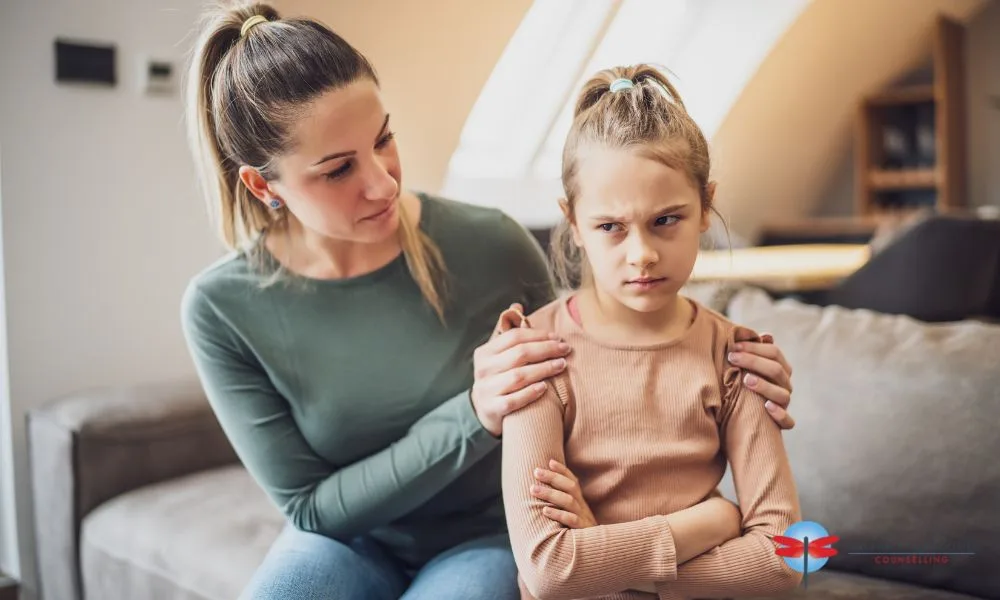
Big feelings and reactions

Your child becomes easily frustrated, upset, or overwhelmed, and even small things can lead to big reactions.

Behaviour you don’t understand

You’re seeing anger, defiance, or challenging behaviours and aren’t always sure what’s behind them or how to help.

Worry, fears, or withdrawal

Your child seems anxious, clingy, unusually quiet, or reluctant to talk about what’s bothering them.

Difficult transitions and routines

Bedtime, mornings, separation, or changes in plans can become unexpectedly stressful or upsetting.

Challenges at school or with friends

Your child is having difficulty with friendships, classroom expectations, or getting along with others — at school, home, or both.

Struggling with change or difficult experiences

Family changes, loss, or upsetting experiences seem to be affecting how your child feels or behaves.

Play is a child’s language. Toys are often their words.

Children don’t always process experiences by talking about them. They may act out situations, create stories, take on different roles, or repeat themes through imaginative play. Within a trusting therapeutic relationship, these experiences offer opportunities to express feelings, work through challenges, solve problems, and practise new responses.

What may look like ordinary play is often meaningful therapeutic work, in counselling for children, play helps children process experiences, discover new possibilities, and develop different ways of responding.

What could become possible?

Through play therapy, children can grow in how they manage feelings, understand themselves, and connect with others.

Calmer, more manageable emotions

Your child develops greater emotional regulation and learns healthier ways to handle frustration, worry, and big feelings.

Greater confidence and independence

Your child builds self-esteem, problem-solving skills, and confidence in making choices and navigating challenges.

Stronger communication and connection

Your child becomes better able to express feelings and needs, strengthen relationships, and feel more understood.

More ease at home, school, and with friends

Your child develops greater flexibility, coping skills, and confidence in navigating routines, transitions, and relationships.

How Play Therapy Can Help

Play therapy uses a child’s natural language of play to support expression, emotional processing, and growth. With the therapist’s guidance and a safe relationship, children can work through experiences, practise new responses, and develop skills that carry into everyday life.

Core areas of support

Our therapeutic approach

Play therapy is more than providing toys and games. Play is used intentionally within a therapeutic relationship to support a child’s emotional, behavioural, and relational development.

Child-Centred Play Therapy

Children are given opportunities to lead their play within a safe, accepting therapeutic relationship. Through this experience, they can express emotions, work through challenges, and develop greater confidence, independence, and self-understanding.

Therapeutically Guided Play

Therapists may use puppets, storytelling, role-play, games, and imaginative play to help children express feelings, process experiences, solve problems, practise new responses, and develop emotional and social skills.

Developmentally Informed and Individualized Support

We recognize that every child develops, learns, and experiences the world differently. Our therapists consider each child’s developmental stage, strengths, neurodevelopmental differences, and emotional needs, adapting therapy accordingly. Parent guidance may also help families better understand and support their child.

Why choose Darcy Bailey & Associates Counselling?

A supportive space where children can express, connect, and grow.

Our therapists use developmentally informed, play-based approaches that respect each child’s individual needs and pace.

Dedicated spaces designed for children

Our practice includes welcoming, intentionally designed therapeutic spaces with toys, games, and expressive materials that support children’s emotional and developmental needs.

Experienced child therapists

Our team includes therapists who work specifically with children and use therapeutic play purposefully to support emotional processing, behavioural growth, and healthier relationships.

Support for children and parents

Alongside your child’s therapeutic work, parent consultations and guidance can help you better understand your child’s developmental needs and strengthen connection at home.

Through play, children can express what they feel, work through what they’ve experienced, and discover new ways to grow.

What to expect

Play therapy is a collaborative process. Here’s what typically happens:

1. Begin with a parent session

For children under 12, counselling begins with an initial parent session. This allows us to understand your child’s concerns, developmental history, strengths, and therapeutic goals.

2. Work through experiences through play

Within a trusting therapeutic relationship, your child uses play, stories, and creative activities to express emotions, work through challenges, solve problems, and practise new ways of responding.

3. Support growth beyond the playroom

As therapy progresses, children can develop greater confidence, emotional regulation, communication, and relationship skills. Parent consultations may help support and reinforce these changes at home.

Helpful Articles about Play Therapy

Practical insights and expert guidance.

Parenting a Child With Big Emotions: When to Seek Professional Support

Parenting a Child With Big Emotions: When to Seek Professional Support

Learn when big emotions may signal a need for professional support and how counselling can help children develop emotional regulation,…

Helping Children Express Big Emotions Through Play

Helping Children Express Big Emotions Through Play

Learn how play helps children express, understand, and manage big emotions, and how parents can support emotional growth at home.

Is My Child’s Behaviour Normal or Do They Need Therapy? 10 Signs Parents Should Know

Is My Child’s Behaviour Normal or Do They Need Therapy? 10 Signs Parents Should Know

As parents, it’s natural to wonder whether a child’s challenging behaviour is just a phase or a sign that something…

Frequently Asked Questions

Find answers to your questions about play therapy. 

Play therapy uses a child’s natural language of play to support emotional expression, processing, and growth. Within a trusting therapeutic relationship, stories, toys, games, and imaginative activities can help children work through experiences, practise new responses, and develop emotional and relationship skills.

Play therapy is especially helpful for younger children, although approaches are adapted to each child’s developmental needs. At Darcy Bailey & Associates Counselling, we provide counselling for children ages 5 and older.

Everyday play is valuable for development. In play therapy, a therapist intentionally uses the play process and therapeutic relationship to support specific emotional, behavioural, or relational goals. What looks like a game or story can also be an opportunity for meaningful processing and learning.

Play therapy uses play, stories, games, and imaginative activities as a primary way of communicating and working therapeutically. Art therapy centres on visual art-making and creative expression, while sandtray therapy uses sand and miniature objects to create scenes. These approaches may complement one another, but each has a distinct focus.

Play therapy may help children express and work through worry, anger, frustration, and difficult experiences while building coping, communication, and problem-solving skills. The approach is tailored to the child rather than assuming all behaviour has the same cause.

Yes. For children under 12, counselling begins with an initial parent session. Your therapist may also offer parent consultations to help you understand your child’s needs and support progress at home, while respecting the child’s privacy and therapeutic relationship.

Our therapists consider each child’s developmental stage, communication style, sensory needs, strengths, and neurodevelopmental differences. Play activities and expectations are adapted to the individual child, and parent guidance can help families better understand what support is developmentally appropriate.

When children feel understood, new possibilities can emerge.

Your child doesn’t need to have all the words to begin working through what they’re experiencing. Through therapeutic play, children can express feelings, build confidence, and develop healthier ways of responding to life’s challenges.

At Darcy Bailey & Associates Counselling, we’re here to support your child and your family with warmth, understanding, and developmentally appropriate care.